Blunderstone Rookery
David CopperfieldBlunderstone Rookery is the family home where David Copperfield is born and where his earliest memories take shape. Its rooms, garden, and surrounding churchyard initially offer the scale of a child’s whole world, but they also hold the absences that define his childhood: a father he never knew, a mother increasingly constrained by Edward Murdstone, and, eventually, a home from which David is sent away. The house’s movement from shelter to estrangement and abandonment gives physical form to the losses that shape his early life.
Setting and Family History
Blunderstone Rookery stands in Suffolk. David Copperfield is born there six months after his father’s death, making the house a place of beginnings already marked by bereavement. In his earliest recollection, his father’s white gravestone lies alone in the churchyard while the house is warm and bright. The contrast between the sheltered parlour and the grave outside gives the domestic setting an emotional boundary: the family home feels protected, but it cannot undo the loss on which David’s life begins.
The name itself belongs to the house’s history. Clara Copperfield explains that David’s father chose Rookery because he liked to think there were rooks nearby. The name becomes an enduring feature of the family story, although Betsey Trotwood later objects to it, quipping that Cookery would have been more practical. When she arrives on the afternoon David is expected to be born, the garden and house become the setting for a meeting between the fearful young mother and the formidable paternal aunt who had disapproved of the marriage. Clara recognizes Betsey at the window before she enters; Betsey presses her nose against the glass rather than announcing herself at the door. The arrival brings the family’s estranged past directly to the house at the moment a new generation is about to begin.
Rooms and Childhood Impressions
David’s first remembered objects are Clara Copperfield and Clara Peggotty, followed by the familiar interior and grounds of the house. Clara Peggotty’s kitchen opens onto a yard with an empty pigeon-house and dog-kennel, while tall fowls and a fierce-looking cock make the ordinary farmyard seem threatening to a small child. Geese pursue him at the side gate, and the dark store-room along the passage is a place to hurry past. Its tubs, jars, and tea-chests, together with a dim light and a mixture of household smells, give the familiar house its pockets of childhood fear.
The two parlours carry different emotional associations. The everyday room is where David, his mother, and Clara Peggotty sit together after the work is done; the best parlour is more formal and less comfortable. Memories of his father’s funeral make that room doleful, and a reading about Lazarus there frightens David so much that he must be shown the quiet churchyard from his bedroom window. The house’s rooms thus join comfort and apprehension: family intimacy exists beside stories of death and the grave that remains visible beyond the home.
The garden, by contrast, becomes a remembered abundance. David recalls its high fence and padlocked gate, its butterflies, and fruit that seems richer than any he has tasted elsewhere. His mother gathers fruit while he furtively eats gooseberries; later, in the winter twilight, he watches her rest and arrange her curls. These small scenes preserve Clara Copperfield as a lively, affectionate presence before the household’s balance changes. Even the elms and ragged rooks’ nests remain part of the house’s remembered outline, recurring as recognizable marks of the place.
A Home Altered by the Murdstones
David returns to Blunderstone Rookery from a visit expecting to run into his mother’s arms. The nearer the house comes, the stronger his sense that it is his nest and that Clara Copperfield is his comforter and friend. But the welcome he anticipates has already been altered: in the best parlour his mother sits on one side of the fire and Edward Murdstone on the other. Clara rises hurriedly but timidly; after greeting Edward, David kisses her, and she pats his shoulder before returning to her work. Under Edward’s watch, the reunion is affectionate but constrained, and David turns to the window rather than looking at either of them.
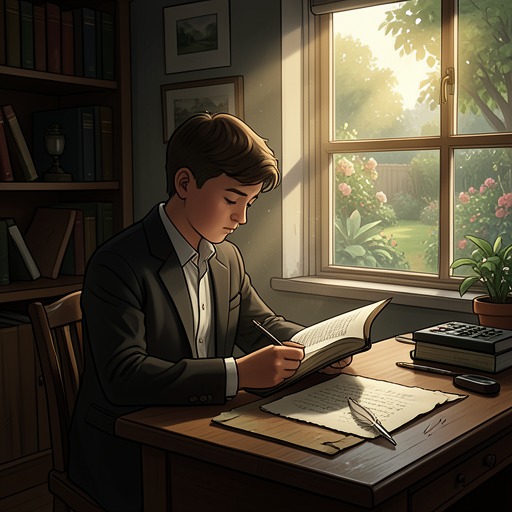
The house also becomes the site of the lessons through which Edward and Miss Murdstone impose their doctrine of firmness. Although Clara is nominally in charge, the two Murdstones are present and use the lessons to discipline her as well as David. His remembered contrast is sharp: learning the alphabet at his mother’s knee had felt easy and companionable, while the later lessons are long, difficult, confusing, and miserable. At the parlour table, books that had once belonged to a shared life become instruments of daily pressure.
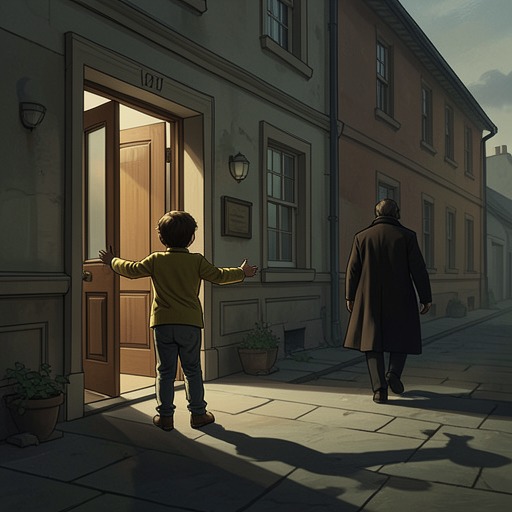
That pressure becomes physical when David enters the parlour one morning and finds Clara anxious, Miss Murdstone firm, and Edward binding a cane. His departure follows the collapse of home as a place of protection. At ten, wearing black for his mother and carrying his small trunk, he leaves the house for work at Murdstone and Grinby’s. As the post-chaise carries him away, the house and church recede, and the grave beneath the tree disappears behind intervening objects. The departing view registers not only a change of address but the loss of the childhood world the house had contained.
Abandonment and Narrative Significance
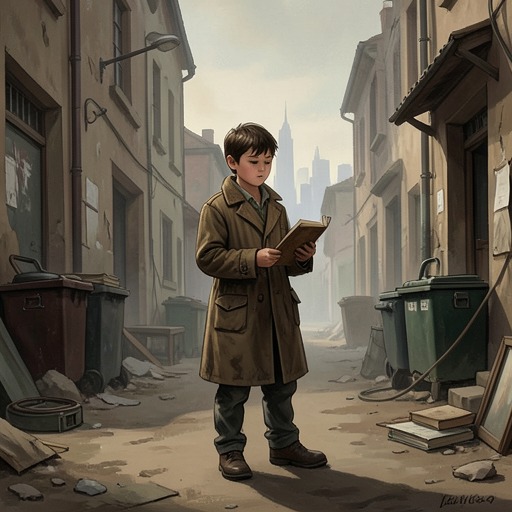
After David has found refuge with Betsey Trotwood, Clara Peggotty writes to tell him that the furniture at the old home has been sold, Edward and Miss Murdstone have gone, and the house is shut up to be let or sold. David imagines weeds overtaking the garden and fallen leaves lying wet along the paths; he pictures winter wind and rain beating against the windows and the empty rooms watched by moonlight. His vision of abandonment makes the house seem dead, joining its fate to the loss of his parents and of everything associated with them.
Blunderstone Rookery therefore persists in David’s life less as a continuing residence than as a structure of memory. Its empty pigeon-house and kennel, fruit trees, parlours, window, churchyard, and rooks’ nests supply concrete images through which the older narrator recovers a childhood that he can remember only retrospectively. The sequence of domestic scenes also makes the home’s decline legible: it begins with the prospect of birth and a mother’s care, passes into a household governed by the Murdstones, and ends with David’s departure and the house’s closure. What is lost is not simply a building, but the particular sense of belonging David had attached to it.